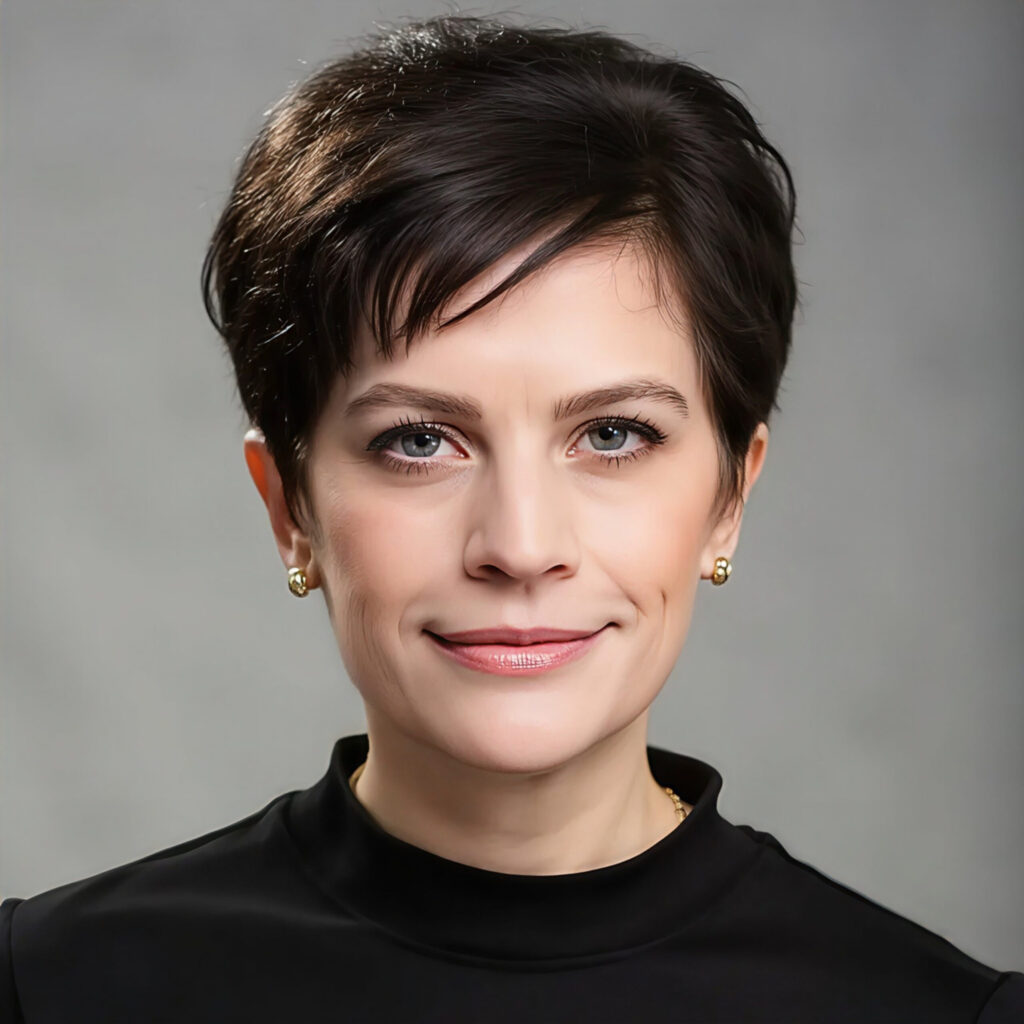
Colleen Rogers, COO and Strategy Advisor (fractional leadership roles), Independent Consultant – Healthcare Startups and Advisory Firms
What is your current role?
Following 20+ years at UnitedHealth Group, where my last role was VP Strategic Initiatives and Delivery, I currently serve as a strategic advisor and fractional leader across three healthcare-focused organizations: Firefly Immersive, Adaptive Product, and BlueInnovo Advisors. My work spans Series A readiness, go-to-market planning, business and product value propositions, and enterprise strategy.
At one company, I lead operations – building internal processes, cross-functional workflows, and performance systems – while also supporting investor engagement by translating complex concepts into clear, actionable documentation, from valuation models and use cases to technical workflows and investment narratives. At another company, I partner directly with the founder to shape business strategy. My role spans competitive and market analysis, refining commercialization plans, and identifying core drivers for scalability and operational readiness. We’re focused on aligning product value to real-world customer needs while laying the groundwork for long-term growth. At the third, I recently co-led a national healthcare executive roundtable and synthesized the insights into a strategic brief and operational toolkit that blended stakeholder input with healthcare trend analysis and actionable frameworks.
I thrive in ambiguity and bring clarity through structure. Storytelling through documentation is one of the most effective tools I use across all my roles to align stakeholders and drive action. Whether it’s a Lean Canvas model, stakeholder map, Miro board, pitch deck, white paper, or data analysis, I blend research, AI tools, and visual strategy to distill complex ideas into clear, compelling narratives.
This approach has helped secure investor funding, shape national presentations on AI in healthcare, and guide founders through strategic pivots. I design every deliverable with intention, thinking through flow, anticipating the audience’s questions, and ensuring each piece has a clear beginning, middle and end. From a 50+ page strategy deck for a national non-profit payer to executive-ready healthcare white papers and roundtable synthesis briefs, I ensure the story and substance work together to spark momentum.
Why did you join the TRUST?
I discovered the TRUST in October 2023 during a season of searching, though I wasn’t quite sure what I was searching for. I saw familiar names and posts on LinkedIn from amazing women who led me to the organization, and the moment I looked deeper, I realized it was exactly what I needed before I knew what I was looking for.
The first event I attended was the Wellbeing gathering, where I met incredible women who made me feel instantly welcomed. In my first year, what resonated most was the sense of community, not just in name, but in spirit. I felt like I had people walking with me, having my back, cheering me on when I needed it, and celebrating alongside me in my wins. This year, I was so honored to receive the Mentor of the Year Award.
I currently serve on two committees within the TRUST: the Leadership Development Committee and the Sponsorship Committee. On the Leadership Development Committee, I focus on the Mentorship Program, which holds special significance for me, given the three pivotal mentors who have helped shape my own career. It’s a privilege to give back in a space that has personally propelled me forward.
I also joined the Sponsorship Committee to challenge myself in new ways, particularly around fundraising, which is a priority in one of the startups I support. I contribute through the Data Analytics and Reporting subcommittee, delivering actionable insights and reporting to help inform board decisions and elevate the impact of the TRUST’s sponsorship efforts.
What has been your favorite part of being a member of the TRUST?
What I love most about being a member of the TRUST is that the name isn’t just a label, it’s a lived experience. ‘Trust’ is something we all need more of: trust in ourselves, in our voices, in our value.
Being part of this community has helped me shake off imposter syndrome, show up more fully, and step into spaces I might have once second-guessed. It’s opened the door to real friendships, deeper confidence, and a more expansive sense of what’s possible, both personally and professionally. It’s authentic support and real conversations, with broad ripple effects.
What is the best career advice you’ve received?
First: You don’t have to do it all yourself. Ask for help.
Early in my career, I often took on more than I should have, believing that competence meant handling everything independently. But leadership isn’t about doing it all, it’s about knowing when and how to bring others in.
Second: Just because you uncover a problem doesn’t mean it’s yours to fix, but it is your responsibility to find it a home.
This shifted how I view ownership. It helped me stop absorbing everything by default and instead focus on connecting the right people to the right issues, enabling more sustainable problem-solving.
And third: It’s okay to let people fail.
If I’m always quietly fixing things behind the scenes, the people around me never build true accountability, and leaders miss the opportunity to address deeper systemic issues. Stepping back, even when I could fix something, has allowed others to grow, and revealed challenges that would have otherwise stayed hidden.
That advice helped me evolve from being the dependable fixer to becoming a more strategic, empowering, and honest leader.
Can you share a pivotal moment in your career that influenced your leadership or professional path?
One of the most pivotal moments in my career was being asked to help stabilize Healthcare.gov during its public crisis. I stepped into a deeply ambiguous role, with no defined scope, no roadmap, and no clear solution, just an urgent, national need. With five-year-old twins at home, I traveled week after week, working around the clock alongside over 50 CMS vendors, federal agencies, White House senior staff, and tech experts. The visibility was intense, and the pressure was constant.
That experience reshaped how I lead. First: we can figure almost anything out, even when the path isn’t clear. Second: relationships are everything. And finally, when we align around a shared goal and leave our titles and egos at the door, we can accomplish extraordinary things. In that environment, we stopped being employees from disparate companies/departments/agencies, and we truly became one team.
I also learned something quieter but just as important: you don’t have to be in the spotlight to lead with impact. Some of the strongest leadership I witnessed came from behind the scenes. My boss at the time modeled this beautifully – she was the backbone, the brain, and the quiet force guiding us through complexity. While others took on public-facing roles, she led with integrity, focus, and conviction, never seeking credit. That shaped how I think about leadership to this day: leadership isn’t about visibility, it’s about impact.
How do you approach mentoring others?
Mentoring is one of the most meaningful parts of my professional life. I’ve had the privilege of supporting women through moments of deep uncertainty, whether they were navigating questions of career direction, compensation, role fit, or personal challenges that impacted their work.
One mentee came into our relationship at a complete crossroads. She didn’t know if she should stay in her job, reskill, look elsewhere, or dive deeper into her current path. Through our work together, she built clarity, confidence, and a renewed sense of purpose. By the end of the year, she had not only affirmed her value but was recognized by her leadership team for the first time in her career, with a compensation increase and accolades that reflected her growth. She once told me, “I constantly remind myself of you when I feel hopeless or am on the verge of giving up.”
Another mentee came to me during a time of profound personal and professional hardship. She was surviving in a hostile work environment and living in an abusive relationship. Over time, she rebuilt her self-worth, advanced into a leadership role, left the marriage, and began to thrive in all areas of her life. She told me, “You’ve been the best influence in my life.”
In both relationships, I never handed out answers; I asked questions and shared my own vulnerable moments and learnings. I created a space where they could reflect, reframe, and make decisions grounded in their own values. That’s the kind of mentoring I believe in – not directing someone’s path but helping them find it for themselves. I often tell my mentees, “Try to take the lessons learned from my mistakes so you don’t have to make the same ones yourself.”
What emerging trend in health care are you most excited about and why?
The marriage of technology and behavioral health is one of the most exciting and urgently needed trends in healthcare. For too long, behavioral health has been underfunded, siloed, and reactive. But the integration of intelligent technology, when done thoughtfully, has the power to extend care beyond the traditional visit, meet people where they are, and shift from crisis response to proactive support.
I’ve led national programs using AI to deliver personalized, evidence-based behavioral health care between visits, enhancing clinical workflows while improving patient experience and access. Today, I’m continuing that work through Firefly Immersive, a company focused on immersive, virtual reality-based clinical care while leveraging the science of gaming and designed to reduce anxiety, pain, and stress. We’re creating new models of care that integrate with provider systems, reduce burden on clinical teams, and empower patients in entirely new ways.
Technology on its own isn’t the solution. But when paired with human insight, empathy, and strong clinical strategy, it can reshape behavioral health as we know it.
What strategies do you use to build effective teams and promote collaboration?
One of the most effective frameworks I draw from is the “Team of Teams” approach, as articulated by General Stanley McChrystal. At its core, this model is about shifting from rigid hierarchies to interconnected, empowered networks. It promotes autonomy, decentralized decision-making, and radical transparency, while still aligning teams to a shared mission – that ‘North Star’. In fast-moving, high-complexity environments, this kind of trust-based coordination is essential.
When I work across enterprises, I lean into this approach by embedding myself within teams, not just leading from the outside. I walk alongside stakeholders as collaborators, not just approvers. That means listening first, learning the culture, and bringing people into the process early. It’s a mindset that transforms ‘buy-in’ into shared ownership. It also accelerates change, because when people co-create solutions, they’re far more likely to champion and sustain them.
Collaboration doesn’t mean everything has to be consensus-driven. It means we design a clear, structured path for input, shared goals, and timely decisions. I often build collaborative governance models that clarify who contributes, who decides, and how decisions ladder up without bottlenecks. That balance, between autonomy and alignment, is what makes a Team of Teams work.
What is something that not many people know about you?
Not many people know I once moved to London on a one-way ticket, with $500 in my pocket and a six-month student work visa. I didn’t know anybody, I didn’t have accommodations, let alone a job – I didn’t have a plan beyond “I’ll figure it out when I get there.” And, somehow, I did. It wasn’t always easy, but I made it through by building relationships, trusting myself, and staying open to what came next. That six-month adventure turned into a multi-year journey. I finished my degree, lived and worked internationally, and built a foundation of confidence and resilience that has stayed with me ever since. It was one of the first times I realized that I could trust my instincts, adapt quickly, and create something meaningful out of uncertainty.